Program Philosophy — “How to Think of designs” & “Learn to build working systems”
Design Thinking Loop: Empathize → Define → Ideate → Prototype → Test → Iterate
CAD Mindset:
Think in sketch → constraints → features → assemblies.
Break big ideas into primitive shapes, profiles, and operations (extrude, revolve, cut, fillet, pattern).
Use parameters (dimensions you can change) to make designs adaptable.
3D Printing Mindset:
Design with the printer in mind: orientation, wall thickness, overhangs, supports, tolerances.
Fail fast, log changes, and iterate.
Learning about 3D Printers:
- Learn the Basics of 3D Design
-
Students create objects using simple shapes in TinkerCAD and understand how real products are built from basic geometry.
- Turn Ideas into Printable Models
-
Children design useful items like name tags, pencil holders, connectors, and mini tools ready for 3D printing.
- Understand How 3D Printers Work
-
Introduction to layer-based printing, filament materials (PLA), slicing concepts, and safe handling of printed parts.
- Build Engineering Thinking Skills
-
Students learn to plan, test, improve, and redesign their creations like real designers and engineers.
- Work with Real Maker Materials
-
Hands-on exposure to PLA filament prints, measuring tools, reference grids, sample mechanical parts, and finished prototypes to connect digital models with physical objects.
Where to Apply (Examples):
Science fair models (levers, gears, pulleys, lungs model, wave machine)
Everyday fixes (cable clips, bag hooks, organizer trays, phone stands)
Community helpers (assistive grips, Braille labels, mask extenders)
Art & culture (Diwali lamps, rangoli extruders, logo keychains)
Robotics & mechanisms (gearboxes, linkages, wheel hubs)
B. Pathways & Outcomes
Advanced (FreeCAD):
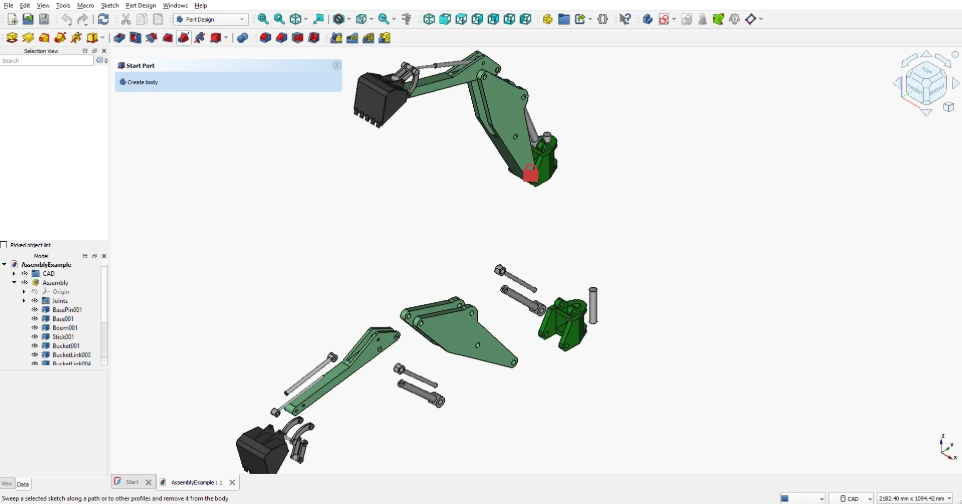
Use Sketcher constraints properly; Part Design workbench (Pad, Pocket, Fillet, Chamfer, Patterns).
Create parametric models (Spreadsheet + Expressions), multi-body parts, and basic assemblies (e.g., A2plus/Assembly4).
Generate 2D drawings (TechDraw), export STL/STEP, and design for reliable printing.
Soft Skills: Visual communication, documentation, teamwork, presentation, and reflection.
C. Who's this for?
- Architects
- Animators
- CAD Technicians
- 3D Artists
- Freelancers
- IT professionals and Engineers
- CAD Drafters
- Product Designers