Skip to Content

The Fundamental Kits

Everything should start with base-fundamentally, and science too!

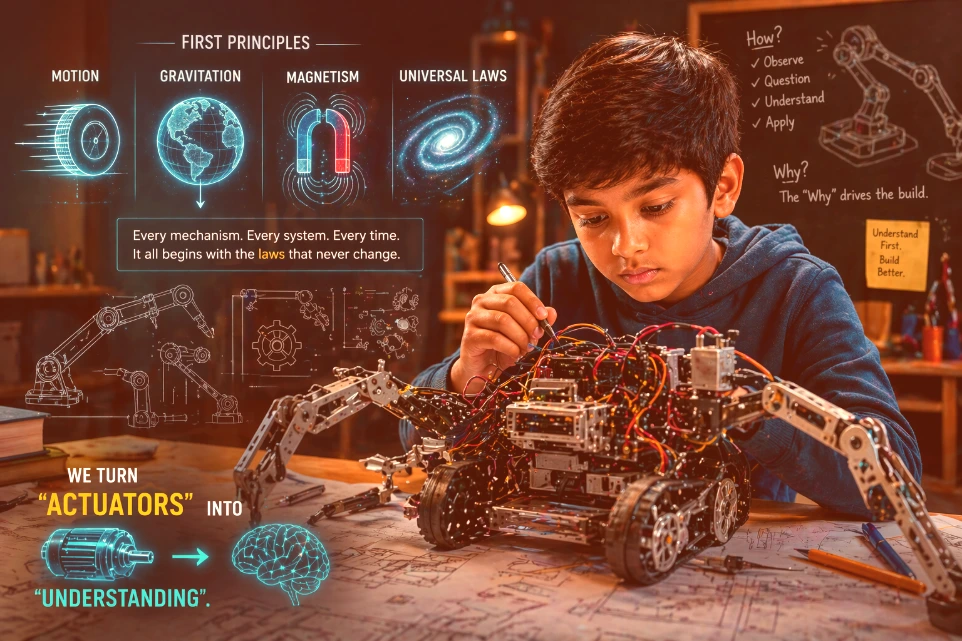
Why children must start with Fundamental Systems Thinking before Robotics & Coding

• The future will not reward children who only use tools — it will reward those who understand systems.

• AI can already write code faster than humans. The real advantage now is the ability to design how systems should work.

• Children must learn how motion, force, energy, and interaction connect before building robots that depend on them.

• Real innovation begins when children understand why things move, balance, lift, attract, and transfer power.

• Robotics without fundamentals creates operators. Fundamentals create inventors.


Why systemic thinking is the most important skill in the AI age

• The world now runs on interconnected systems, not isolated subjects.

• Future problem-solving requires understanding cause, effect, feedback, and control loops.

• Children must learn to break complex problems into smaller working parts.

• Designing systems from scratch builds confidence that no automation can replace.

• System thinkers adapt faster than tool users in a rapidly changing technological world.


Why learning to build from scratch matters more than ever


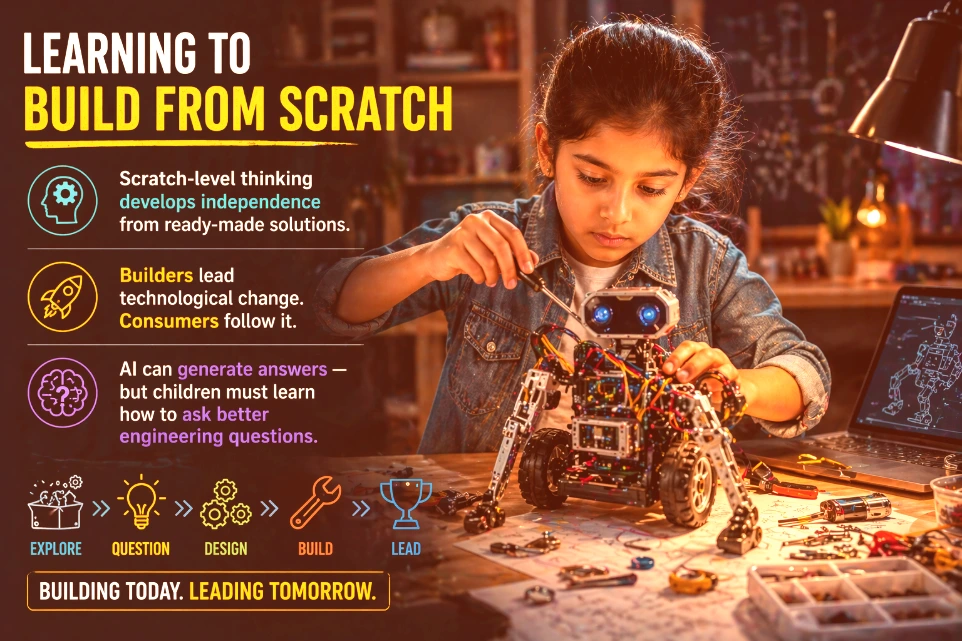
• AI can generate answers — but children must learn how to ask better engineering questions.

• Machines can assist creation, but humans must define purpose, structure, and direction.

• Children who build mechanisms early understand how technology behaves in real life.

• Scratch-level thinking develops independence from ready-made solutions.

• Builders lead technological change. Consumers follow it.


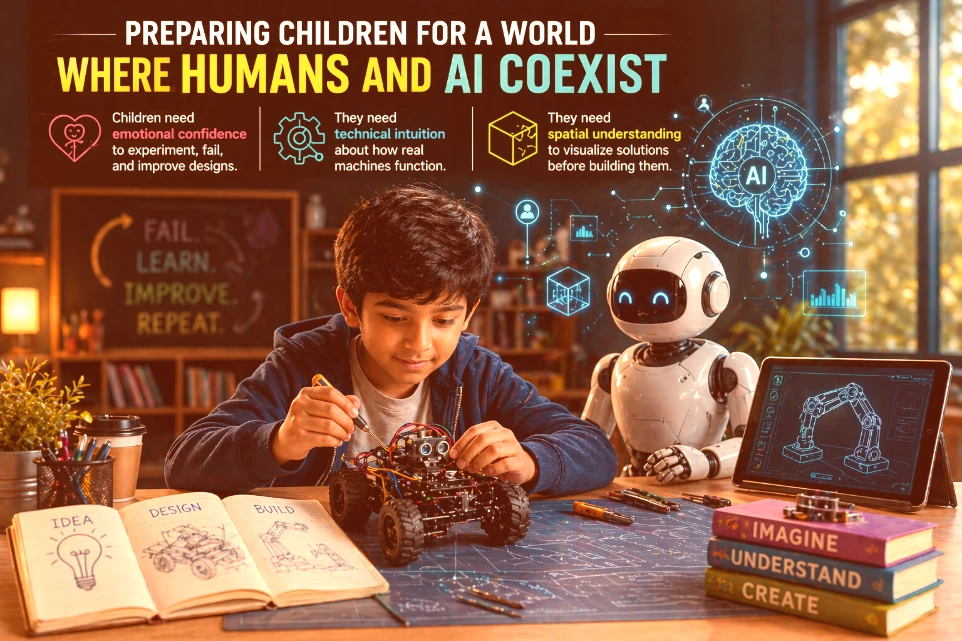
Preparing children for a world where humans and AI coexist


• Children need emotional confidence to experiment, fail, and improve designs.

• They need technical intuition about how real machines function.

• They need spatial understanding to visualize solutions before building them.

• They need systemic thinking to connect ideas across physics, mechanics, and energy.

• They need maker experiences that prepare them to collaborate with AI—not compete against it.


Why Kinderbrainer Fundamental Kits come first


• They develop thinking before programming

• mechanisms before automation

• understanding before assembly

• reasoning before instructions

• systems before screens

The AI world needs more creators -less consumers!

Screeeens

Read here!

74% of school students already spend more than 2 hours daily on non-academic screen use

Passive consumption is replacing exploratory learning time.

Screeeens

Read here!

Children with more than 3 hours of daily screen exposure show significantly lower cognitive scores

Attention span, reasoning, and memory are directly affected.

Screeeens

Read here!

Excessive screen exposure is linked to higher risks of anxiety, depression, and ADHD when daily usage exceeds 4 hours.

Emotional readiness for problem-solving declines with digital overexposure.

Screeeens

Read here!  

Children aged 8–18 now average between 4–7 hours of screen time daily across devices and media environments

Hands-on building time is shrinking dramatically.

Start principally - 100% Screen free - with Kinderbrainer!

₹ 979.00 ₹ 1,239.00
₹ 1,149.00 ₹ 1,359.00
₹ 1,299.00 ₹ 1,699.00